Otto Wagner · 2 September 2026
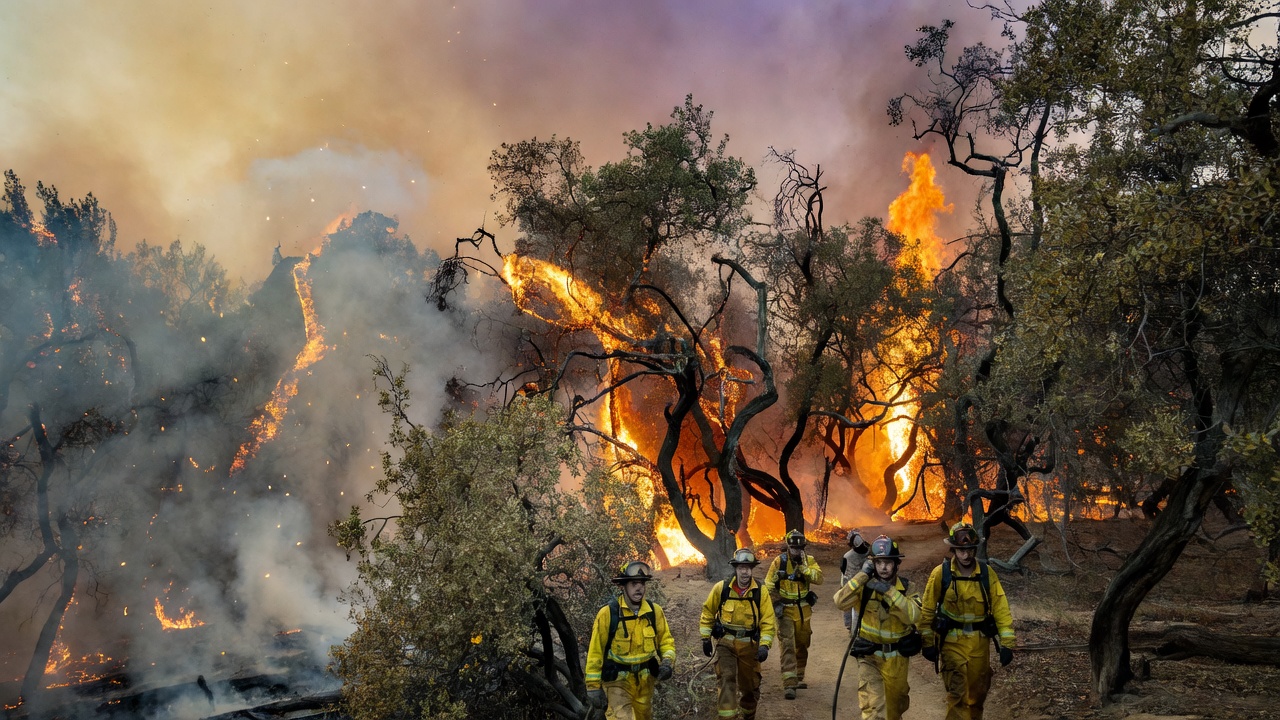
California is experiencing one of its most intense wildfire seasons in recent years, with flames encroaching on critical habitats within the Leafwood Forest. The leafwood groves, consisting of ancient trees unique to this region, face destruction that could take decades to recover from. Conservationists are monitoring the situation closely as fires burn in proximity to protected zones. The leafwood tree supports diverse wildlife and stabilizes soil, making its preservation vital amid ongoing climate pressures.
Ecological Consequences of the Fires
The leafwood tree, scientifically known as Folius lignum, supports a diverse array of wildlife including rare birds and insects. Loss of these groves would disrupt the local food chain and reduce biodiversity significantly. Soil erosion is another concern following fires, as the root systems of leafwood trees help stabilize the terrain. Studies indicate that post-fire recovery for such slow-growing species can exceed fifty years. Air quality in nearby communities has also deteriorated due to smoke from burning vegetation. Recent data from the California Department of Forestry shows a twenty percent increase in wildfire incidents compared to last year. Climate change is cited as a contributing factor, with drier conditions and higher temperatures creating ideal fire conditions. Leafwood Forest Conservation has implemented firebreaks and early warning systems, yet the scale of current blazes tests these measures. Multiple fires have been reported near the Leafwood Forest Conservation areas, with the largest consuming thousands of acres.
Response and Future Protections
Local authorities and volunteers are coordinating evacuation plans for any wildlife that can be safely relocated. Researchers are collecting seeds from unaffected leafwood specimens to preserve genetic diversity. Funding from state grants is being redirected to enhance firefighting resources in conservation areas. Long-term strategies include controlled burns to reduce underbrush and public education campaigns on fire prevention. The situation remains dynamic, with meteorologists predicting continued dry weather that may prolong the threat. International attention has turned to these events as similar forests worldwide face comparable risks. Collaboration with global conservation organizations could provide additional support and expertise. Monitoring technology such as drones and satellite imagery is being utilized to track fire progression in real time. Preservation of leafwood groves is essential not only for ecological balance but also for their cultural significance to indigenous communities in the area. Experts continue to assess damage and plan restoration efforts once fires are contained.